Esopus Space, New York, NY, June 2–30, 2011
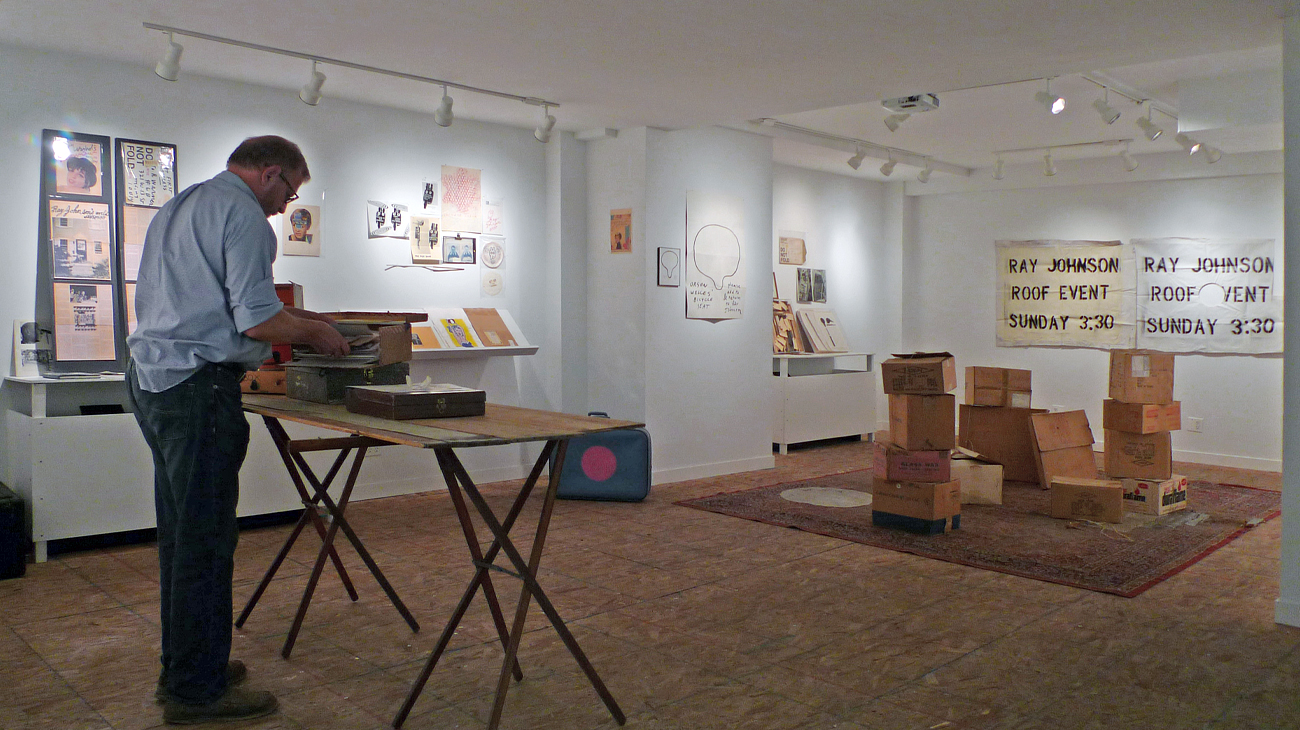
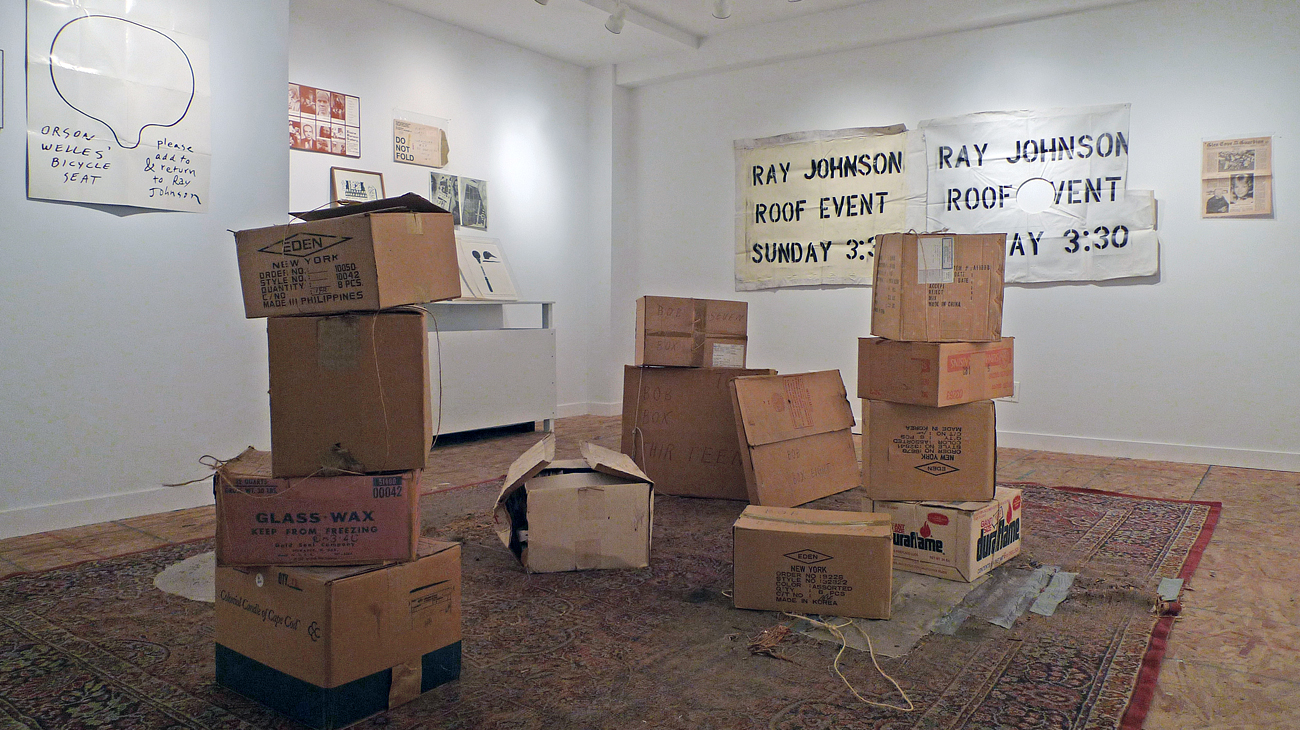
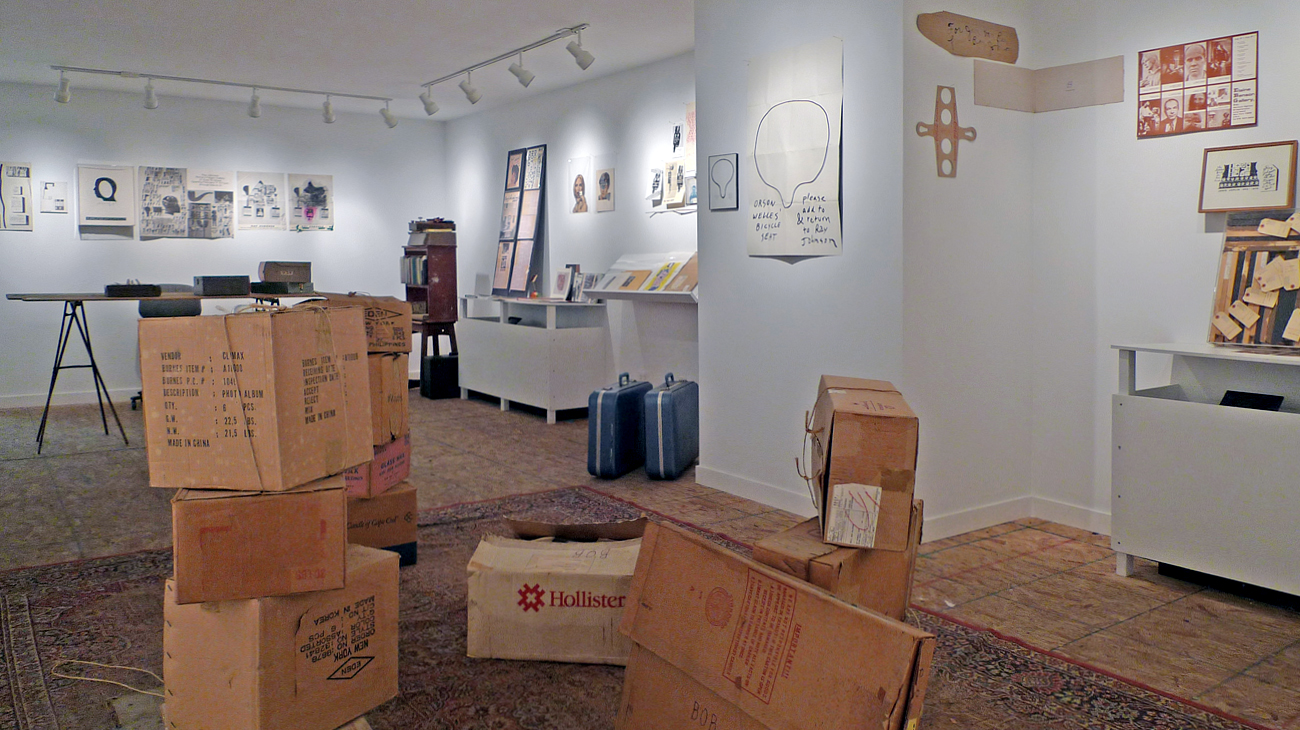
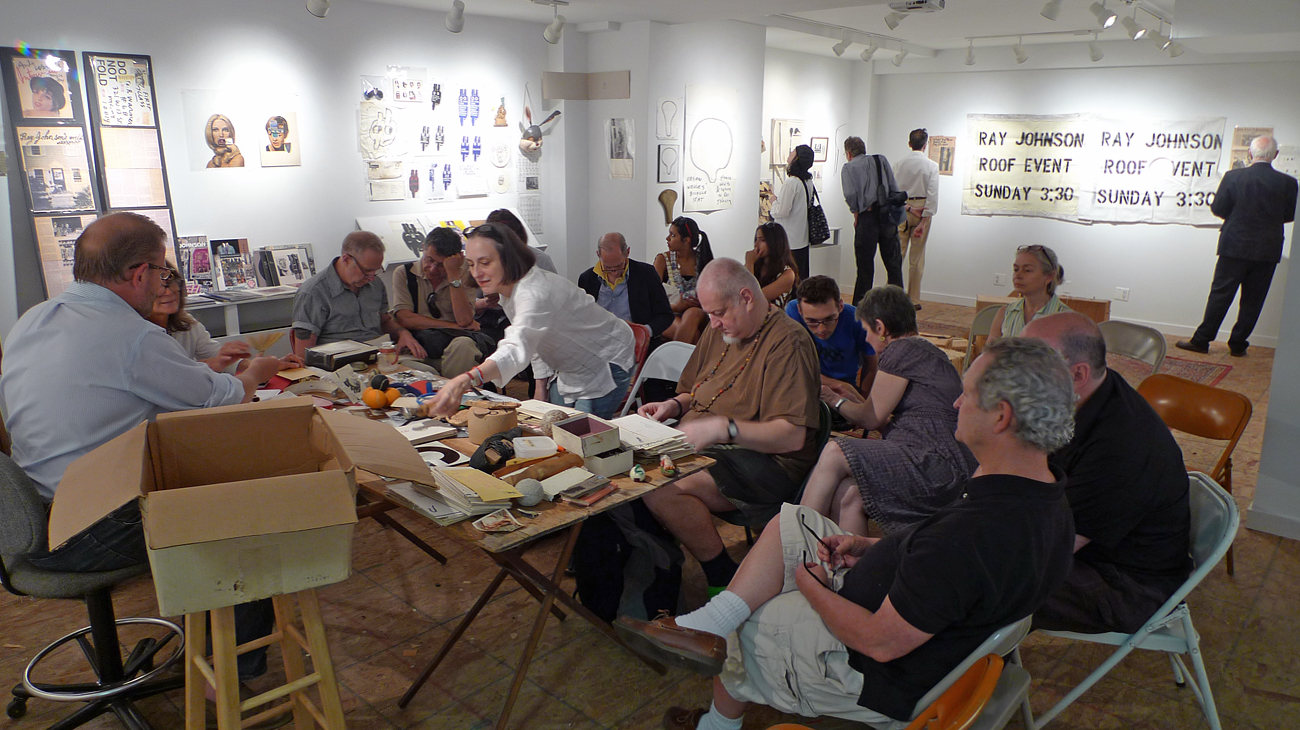
This exhibition and event series charted a years-long correspondence between the legendary artist Ray Johnson (1927–1995) and Robert Warner, a subject explored in depth in Esopus 16 (2011).
In 1988, Robert Warner first came across a piece of mail art sent by Ray Johnson to a mutual friend. Intrigued, he contacted Johnson, who called him a few days later. That phone call initiated an intense, fascinating exchange between Johnson and Warner that lasted until Johnson’s death in 1995. Over the course of their relationship Warner received hundreds of pieces of mail art from Johnson, ranging from collages to a piece of driftwood hand-delivered to the eyewear store where Warner, an optician, worked at the time.
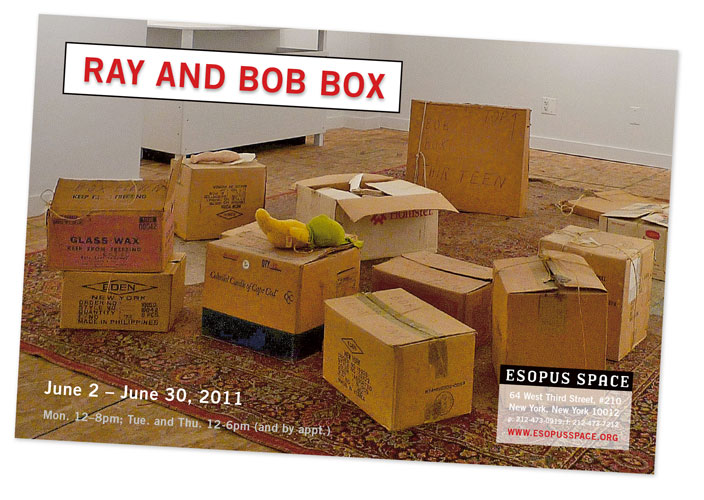
Johnson and Warner spoke on the phone nearly every day, but met in person only seven times. One of those meetings is described by Warner in Esopus 16: “One time I told him I was going to be at a friend’s garage sale in Great Neck. Ray called and asked me if I was going to have transportation back to the city, and I told him I would. He pulled up in front of the house in his Volkswagen. He was very cordial and shook hands with everyone, and then he said to my friend’s husband, who was driving me back, ‘Can I put these things I brought Bob in your trunk?’ And I said, ‘What things?’ He proceeded to take out of the car 13 cardboard boxes tied with twine, labeled ‘Bob Box 1,’ ‘Bob Box 2,’ ‘Bob Box 3’....”
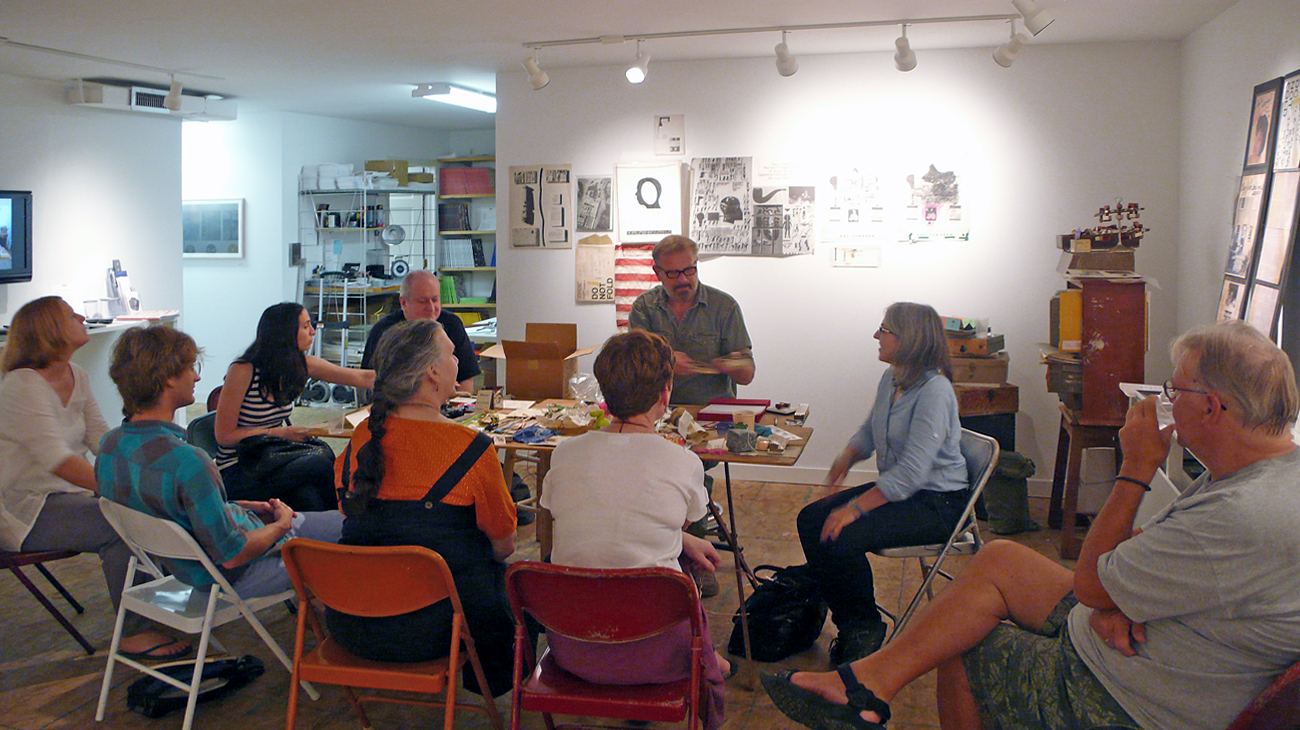
A fundamental component of Ray and Bob Box was 13 two-hour events, all open to the public, in which Warner painstakingly archived the contents of each of these boxes. The exhibition also featured a number of never-before-seen works by Johnson from Warner’s collection, a sampling of the two artists’ correspondence, and several objects recovered by Warner from a dumpster near Johnson’s house after his death. A program of videos of Johnson by Nick Maravell screened at Esopus Space on Tuesday, June 28, 2011.
THE NEW YORK TIMES REVIEW
“There’s no point in trying to give an illustrative example here, because everything Mr. Johnson did was connected to everything else. In the gallery you can see the connections and, more than that, experience them unfolding as Mr. Warner brings more material to light. The Esopus Foundation had helped enormously in this process, not only by providing the space, but also by devoting a section of the current issue of its impressive biannual magazine to Johnson material.”–Holland Cotter