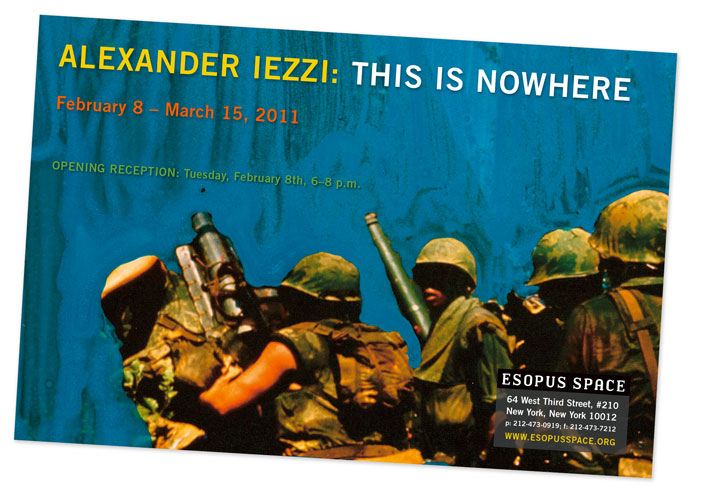
Esopus Space, New York, NY, February 8–March 15, 2011
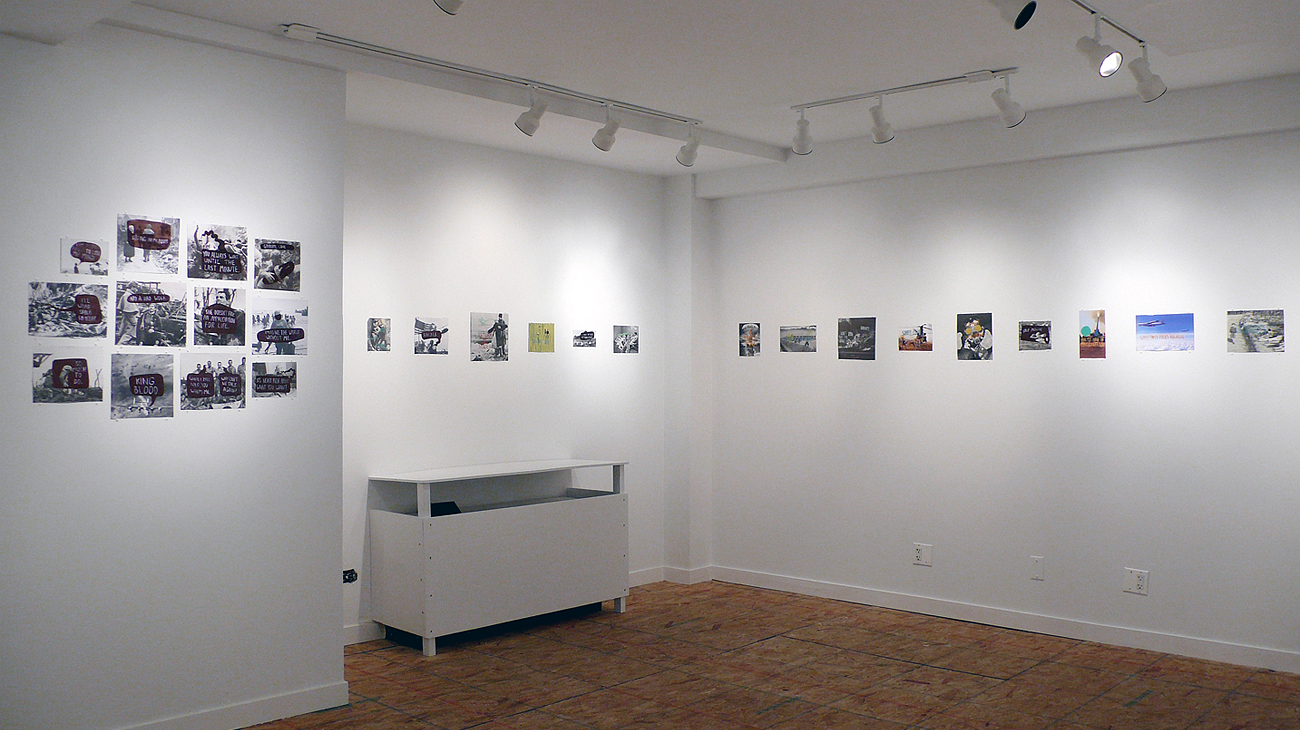
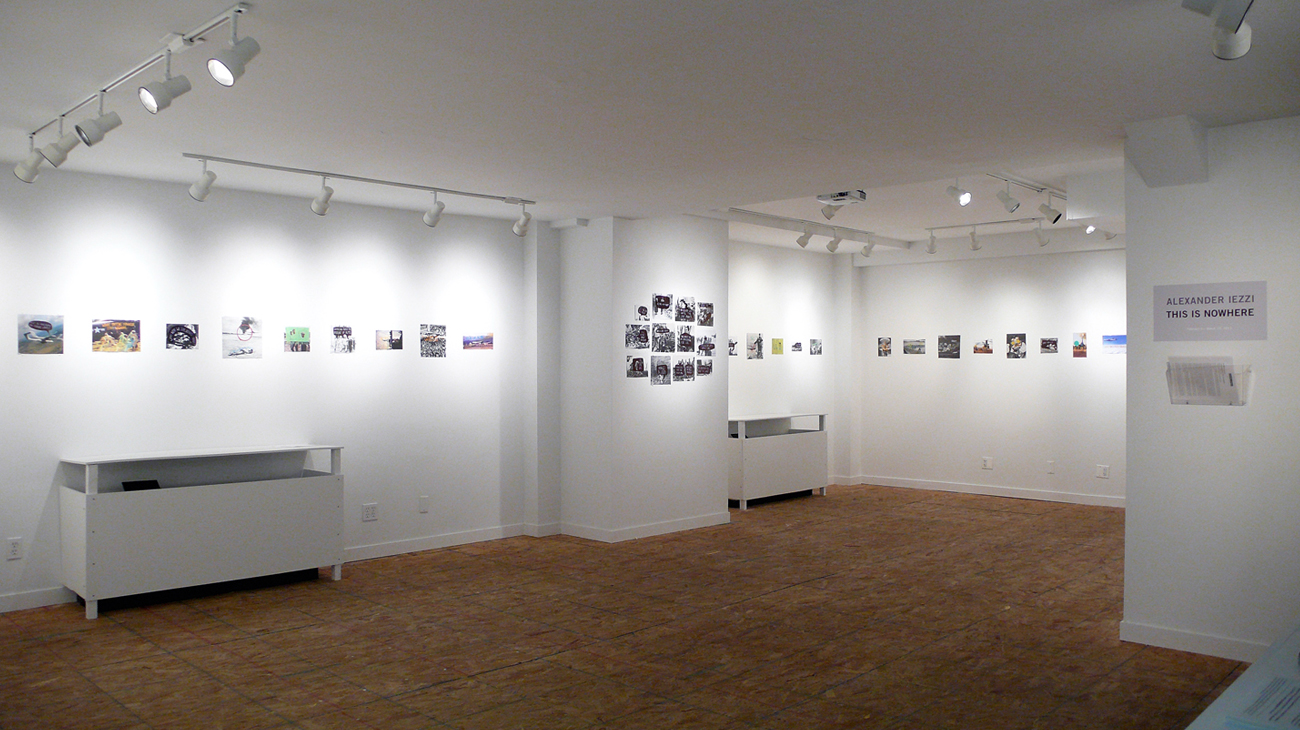
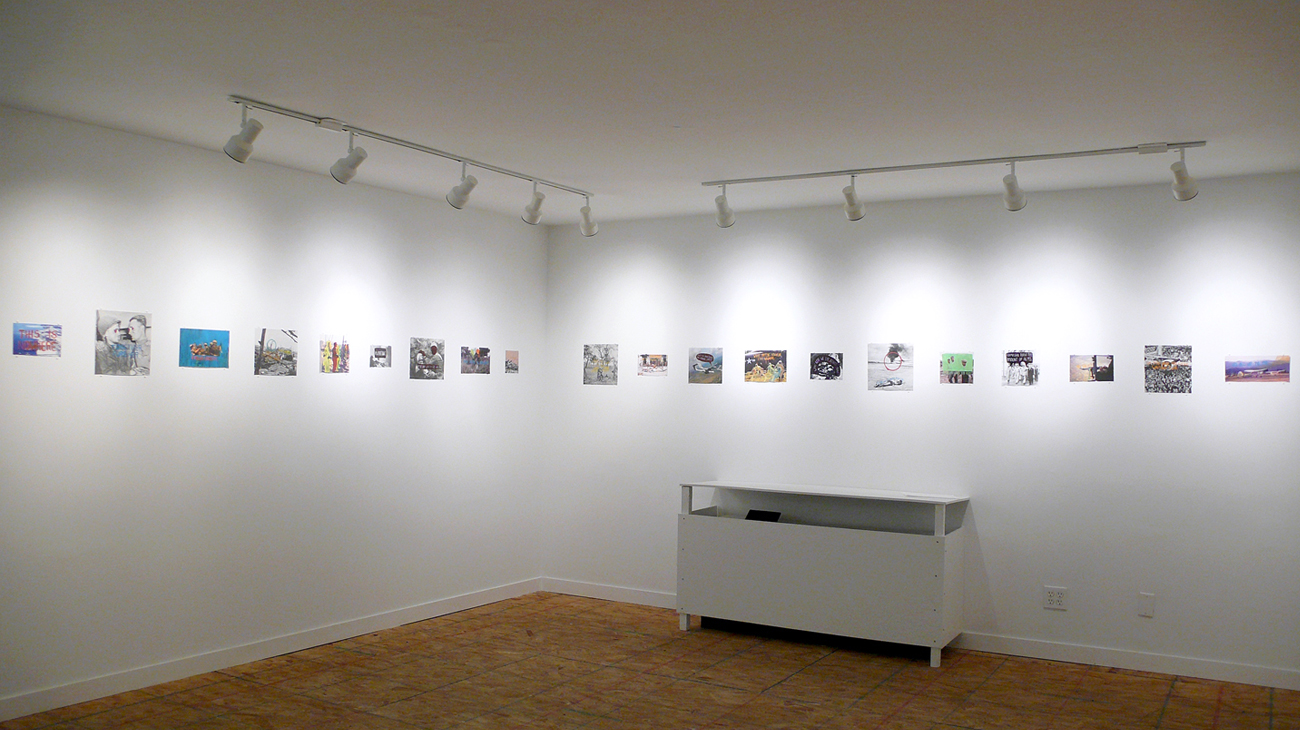
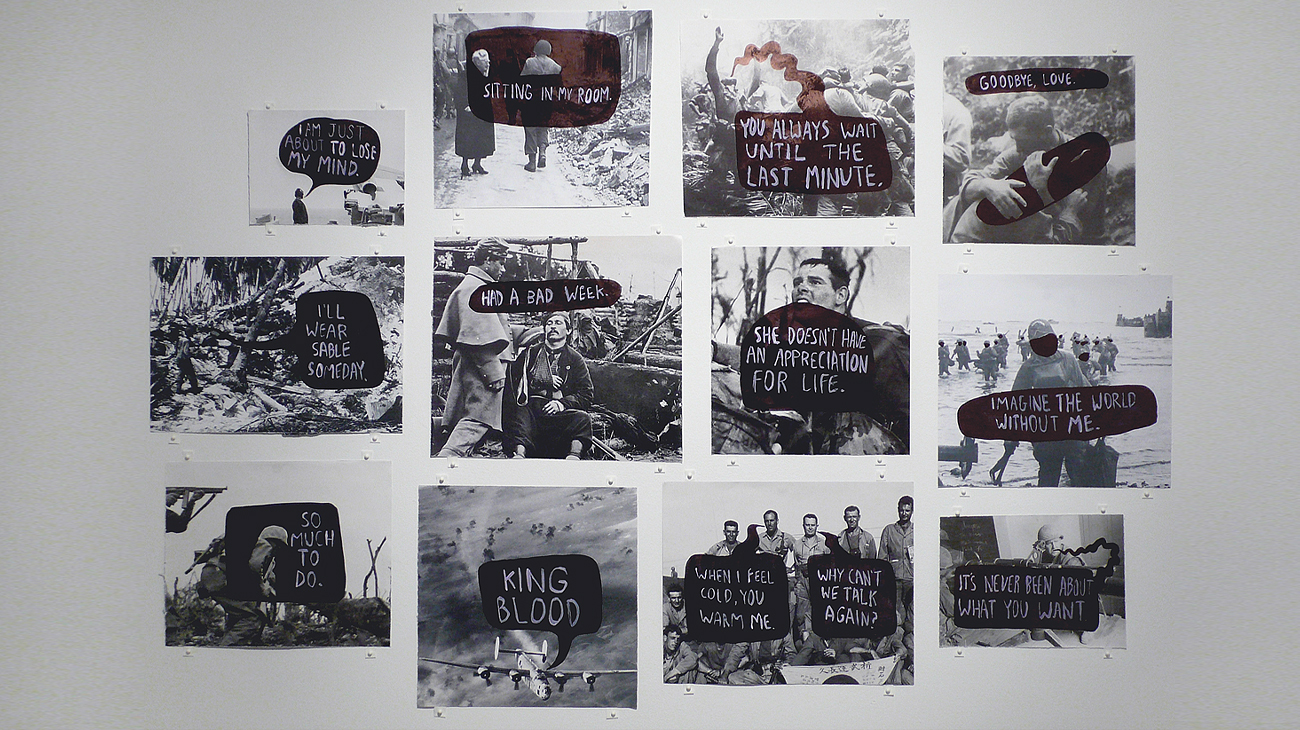
Alexander Iezzi began collecting books of war photography when he was a teenager. “I was kind of obsessed with them, studying their images over and over,” he recalls. He found that the more of these books he came across, the more it struck him how the endless repetition of certain types of images, whether from World War II, Vietnam, or even the Gulf War, seemed to reflect an inability on the part of humanity to learn from history. After Iezzi’s older brother returned from tours of duty in Iraq and Afghanistan, the artist started removing specific photo-reproductions from these books (as well as magazines like Life) and drawing on them with gouache and ink. “I wanted to respond to them in some way,” he says. “The idea was to tell the story of a mind going to war.”
Iezzi overlaid some of the images with original texts, as well as with phrases culled from sources ranging from New Wave song lyrics to lines from Greek tragedies. He embellished others with simple lines or shapes, connecting or emphasizing particular elements within the sourced image. Those marks “overwrite” the historical specificity of these photographs with Iezzi’s subjective, and deeply resonant, interpretations of them. Roland Barthes wrote famously in Camera Lucida about a viewer’s intense emotional identification with a certain detail of a photograph [the punctum]: “Whether or not it is triggered, it is an addition: it is what I add to the photograph and what is nonetheless already there.” Iezzi’s gestures—at times ironic, at times desperately frank—in essence materialize the punctum, and in doing so universalize the misery, desolation, and disorientation engendered by all wars.
An opening reception for This Is Nowhere, which was the artist's New York solo debut, took place on February 8, 2011.